Twelve years of blogging
Are you struggling with performance issues in your Spring, Jakarta EE, or Java EE application?
Imagine having a tool that could automatically detect performance issues in your JPA and Hibernate data access layer long before pushing a problematic change into production!
With the widespread adoption of AI agents generating code in a heartbeat, having such a tool that can watch your back and prevent performance issues during development, long before they affect production systems, can save your company a lot of money and make you a hero!
Hypersistence Optimizer is that tool, and it works with Spring Boot, Spring Framework, Jakarta EE, Java EE, Quarkus, Micronaut, or Play Framework.
So, rather than allowing performance issues to annoy your customers, you are better off preventing those issues using Hypersistence Optimizer and enjoying spending your time on the things that you love!
Twelve years later!
Twelve years ago today, I decided to create this blog on WordPress.com to share whatever I was finding interesting while working as a software architect.
Prior to starting this blog, I didn’t have any writing experience, which you can clearly see in the first article I’ve ever published. However, practice makes perfect, and in time, I managed to learn how to express myself in writing, whether it was an article, a social media post, an answer on StackOverflow, or a book.
Follow Your Bliss
I’ve always loved to read. While reading technical books and articles is basically unavoidable when you are a self-taught software developer, I didn’t limit myself to technology.
In fact, as a student, I remember reading random articles on Wikipedia about history, geography, languages, economy, psychology, or whatever I found interesting at the time.
During one of my aimless Internet browsing forays, I stumbled on this page from the Joseph Campbell Foundation. I had no idea who Joseph Campbell was, but this dialogue between
Bill Moyers and Joseph Campbell struck me deeply:
Bill Moyers: Do you ever have the sense of… being helped by hidden hands?
Joseph Campbell: All the time. It is miraculous. I even have a superstition that has grown on me as a result of invisible hands coming all the time––namely, that if you do follow your bliss you put yourself on a kind of track that has been there all the while, waiting for you, and the life that you ought to be living is the one you are living.
When you can see that, you begin to meet people who are in your field of bliss, and they open doors to you. I say, follow your bliss and don’t be afraid, and doors will open where you didn’t know they were going to be.
At the time, I was studying at the Electronics and Telecommunication University and, after reading this book by Calin Vaduva, I decided that I wanted to continue studying Java to become a software engineer.
That quote itself is true, and it’s the reason why you’re reading this article. Without pursuing it, I would have never pivoted to software engineering. That was in the autumn of 2002. Starting that semester, I followed my bliss and pushed myself to learning as much as possible about software development, and in April 2005, I got my first job as a Java developer at Artsoft Consult.
The second time in my career when I decided to follow my bliss was in September 2013, when I started this blog. I’ve been wanting to do so for several years and always postponed it for “one day”. While most often that “one day” never really comes, I got lucky to remember that Campbell’s quote, and that’s how this blog was born.
In October 2015, I followed my bliss when I quit a safe job at Artsoft Consult in order to have the time to write my High-Performance Java Persistence book. That was a risky move since, at the time, I didn’t have any revenue stream. Luckily, the invisible hands that Campbell mentioned helped me land a Developer Advocate job at Red Hat.
The next time I followed my bliss was in 2019 when I quit my awesome job at Red Hat so that I could create Hypersistense Optimizer and the High-Performance SQL training.
This year, I left my CTO job at BMW TechWorks Romania in order to follow my bliss one more time and be able to pursue a PhD research program that, hopefully, will allow me to become a lecturer. Being able to provide my courses to university students so that they can learn about performance tuning prior to experiencing all the downsides of an inefficient data access layer is my kind of bliss.
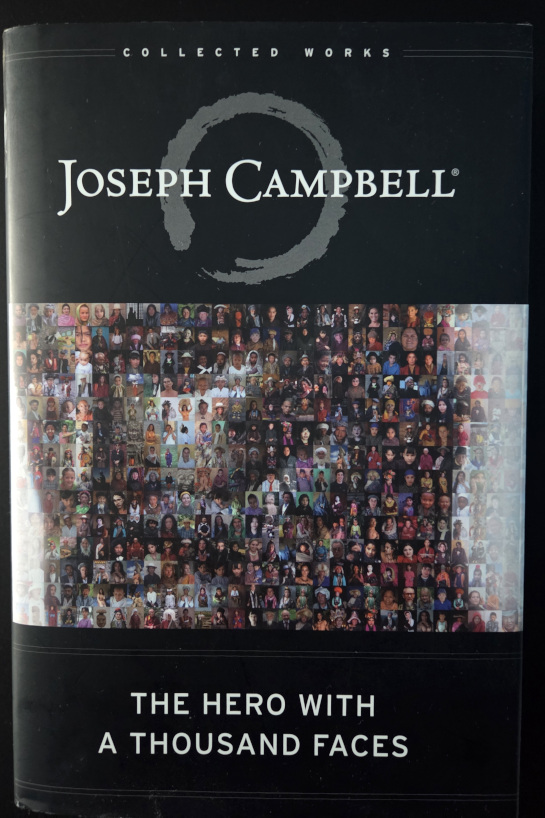
If you’re curious about Campbell’s work, then I recommend you start with The Hero with a Thousand Faces, a book he wrote in 1949, which, by the way, inspired George Lucas to write the original Star Wars trilogy.
Blog stats
Every year, on this day, I write a report about all the achievements that this blog has made possible.
If you are curious about my previous reports, check out the following list:
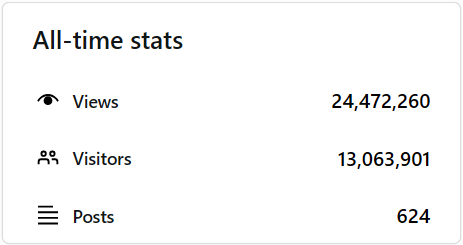
In 12 years, I have managed to publish 624 articles, which generated over 24.4 million views from almost 13 million visitors.
Social media
Once I started writing on this blog, I started to see the value of social media, and to increase my audience, over the past twelve years, I invested time in expanding my network on X (Twitter), LinkedIn, and Facebook.
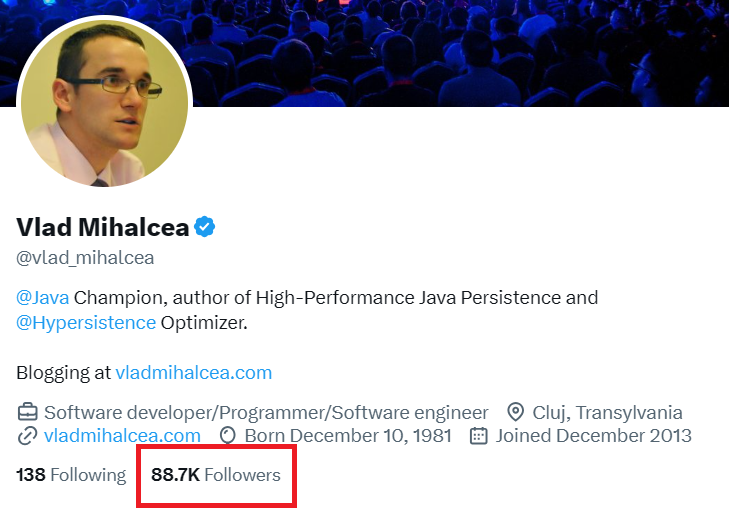
Since the 2024 anniversary, I have managed to increase my X audience from 81.5k followers to 88.7k.
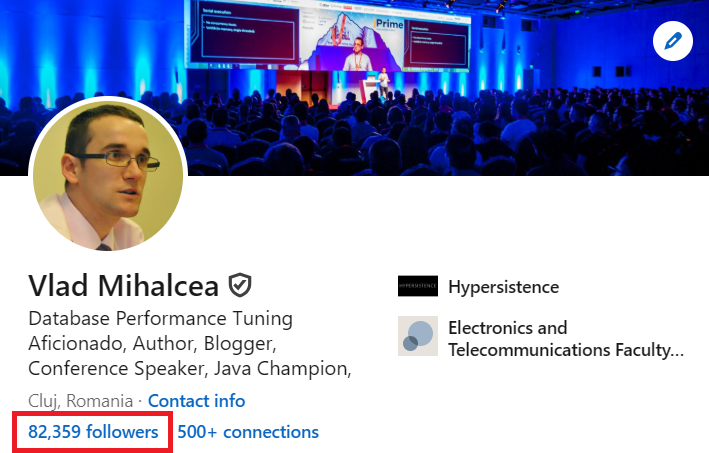
While initially I used Twitter almost exclusively for technical marketing, since 2020, I’ve been growing my presence on LinkedIn as well, and to my surprise, LinkedIn provides better engagement for the type of content that I publish. Since the 11th anniversary, my LinkedIn follower count has grown from 74k to 82k followers.
Providing my video courses in Korean, Japanese, and Vietnamese
This year, I started collaborating with Inflab, and, using AI, they translated my voice to Korean, Japanese, and Vietnamese, and started offering my courses to their audience.
Although we’ve been offering my courses for just 6 months on the Inflean platform, we managed to sell over 1170 copies of my video courses on the Asian market.
This is great since previously my courses were only accessible to the English-speaking communities, and that didn’t overlap with the huge East Asian market.
High-Performance Spring Persistence
Last year, I finished the High-Performance Spring Persistence training, and I’m now working on releasing a video course for it as well, so stay tuned for the official announcement.
Hypersistence Optimizer
Started in 2019, Hypersistence Optimizer has been able to validate the Hibernate mappings, configurations, and data access operations so that you can get a much better performance from your Java data access layer.
Over the past year, I managed to release four new versions that provide support for Hibernate ORM 7.1 and 7.0.
PhD
Software developers are students for life. Ever since I got my hands on Calin Vaduva’s book, I’ve been learning a lot about software development, system architectures, database systems, and performance tuning.
The fact that I’ve been blogging for twelve years, written a book, and run thousands of hours of training, got me thinking that I should follow my bliss and become an actual lecturer, and for this reason, in July, I applied for a PhD program and got accepted.
So, this autumn I’m starting my research into the field of Automatic Data Performance Tuning at the Technical University of Cluj-Napoca. I’m looking forward to continuing the research that I started with this blog and formalizing it into academic studies.
Thanks for reading my blog, and stay tuned for more!