The hibernate.enable_lazy_load_no_trans Anti-Pattern
Are you struggling with performance issues in your Spring, Jakarta EE, or Java EE application?
Imagine having a tool that could automatically detect performance issues in your JPA and Hibernate data access layer long before pushing a problematic change into production!
With the widespread adoption of AI agents generating code in a heartbeat, having such a tool that can watch your back and prevent performance issues during development, long before they affect production systems, can save your company a lot of money and make you a hero!
Hypersistence Optimizer is that tool, and it works with Spring Boot, Spring Framework, Jakarta EE, Java EE, Quarkus, Micronaut, or Play Framework.
So, rather than allowing performance issues to annoy your customers, you are better off preventing those issues using Hypersistence Optimizer and enjoying spending your time on the things that you love!
Introduction
I’ve already written about the Open Session in View Anti-Pattern, so now it’s time to add another Hibernate fetching bad practices. Although the hibernate.enable_lazy_load_no_trans configuration property is a lesser-known setting, it’s good to know why you shouldn’t employ it in your data access layer code.
What does it do?
By default, this property is disabled and, to enable it, you need to provide the following configuration property:
<property
    name="hibernate.enable_lazy_load_no_trans"
    value="true"/>
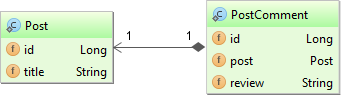
Considering the following entities:
With this configuration property in place, the following code snippets can be executed without throwing any LazyInitializationException:
List<PostComment> comments = null;

EntityManager entityManager = null;
EntityTransaction transaction = null;
try {
    entityManager = entityManagerFactory()
        .createEntityManager();
    transaction = entityManager.getTransaction();
    transaction.begin();

    comments = entityManager.createQuery(
        "select pc " +
        "from PostComment pc " +
        "where pc.review = :review", PostComment.class)
    .setParameter("review", review)
    .getResultList();

    transaction.commit();
} catch (Throwable e) {
    if ( transaction != null && transaction.isActive())
        transaction.rollback();
    throw e;
} finally {
    if (entityManager != null) {
        entityManager.close();
    }
}
for(PostComment comment : comments) {
    LOGGER.info("The post title is '{}'",
        comment.getPost().getTitle());
}
Without the hibernate.enable_lazy_load_no_trans configuration property in place, the comment.getPost().getTitle() line would throw a LazyInitializationException because the comments collection was not initialized, and the Persistence Context is already closed, along with the database connection that fetched the post entity.
Behind the scenes, a temporary Session is opened just for initializing every post association. Every temporary Session implies acquiring a new database connection, as well as a new database transaction.
The more association being loaded lazily, the more additional connections are going to be requested which puts pressure on the underlying connection pool. Each association being loaded in a new transaction, the transaction log is forced to flush after each association initialization.
If you enjoyed this article, I bet you are going to love my Book and Video Courses as well.


Conclusion
Just like Open Session in View, the hibernate.enable_lazy_load_no_trans configuration property is an anti-pattern as well because it only treats the symptoms and does not solve the actual cause of the LazyInitializationException.
By properly initializing all lazy associations prior to closing the initial Persistence Context, and switching to DTO projections where entities are not even necessary, the LazyInitializationException is prevented in a much more efficient way.