Transactions and Concurrency Control
Are you struggling with performance issues in your Spring, Jakarta EE, or Java EE application?
What if there were a tool that could automatically detect what caused performance issues in your JPA and Hibernate data access layer?
Wouldn’t it be awesome to have such a tool to watch your application and prevent performance issues during development, long before they affect production systems?
Well, Hypersistence Optimizer is that tool! And it works with Spring Boot, Spring Framework, Jakarta EE, Java EE, Quarkus, Micronaut, or Play Framework.
So, rather than fixing performance issues in your production system on a Saturday night, you are better off using Hypersistence Optimizer to help you prevent those issues so that you can spend your time on the things that you love!
Recently, I stumbled on the following Twitter thread:
A lesser known jOOQ feature that developers don't know about, but DBAs will rejoice!
— jOOQ (@JavaOOQ) April 11, 2018
Automatic IN-list padding (to prevent contention on execution plan caches / too many hard parses)https://t.co/CNa7kd5rAr
This jOOQ feature is indeed really useful since it reduces the number of SQL statements that have to be generated when varying the IN clause parameters dynamically.
Starting with Hibernate ORM 5.2.18, it’s now possible to use IN clause parameter padding so that you can improve SQL Statement Caching efficiency.
In this article, I’m going to explain how this new mechanism works and why you should definitely consider it when using a relational database system that supports Execution Plan caching.
Now, considering we have the following JPA entity:
@Entity(name = "Post")
@Table(name = "post")
public class Post {

    @Id
    private Integer id;

    private String title;

    //Getters and setters omitted for brevity
}
And, let’s say we want to load multiple Post entities by their identifiers using the following JPA entity query:
List<Post> getPostByIds(
        EntityManager entityManager,
        Integer... ids) {
    return entityManager.createQuery(
        "select p " +
        "from Post p " +
        "where p.id in :ids", Post.class)
    .setParameter("ids", Arrays.asList(ids))
    .getResultList();
}
When running the following test case:
assertEquals(
    3,
    getPostByIds(entityManager, 1, 2, 3).size()
);

assertEquals(
    4,
    getPostByIds(entityManager, 1, 2, 3, 4).size()
);

assertEquals(
    5,
    getPostByIds(entityManager, 1, 2, 3, 4, 5).size()
);

assertEquals(
    6,
    getPostByIds(entityManager, 1, 2, 3, 4, 5, 6).size()
);
Hibernate will execute the following SQL statements:
Query:["
    SELECT  p.id AS id1_0_, p.title AS title2_0_
    FROM    post p
    WHERE   p.id IN (? , ? , ?)
"],
Params:[
    1, 2, 3
]

Query:["
    SELECT  p.id AS id1_0_, p.title AS title2_0_
    FROM    post p
    WHERE   p.id IN (?, ?, ?, ?)
"],
Params:[
    1, 2, 3, 4
]

Query:["
    SELECT  p.id AS id1_0_, p.title AS title2_0_
    FROM    post p
    WHERE   p.id IN (? , ? , ? , ? , ?)
"],
Params:[
    1, 2, 3, 4, 5
]

Query:["
    SELECT  p.id AS id1_0_, p.title AS title2_0_
    FROM    post p
    WHERE   p.id IN (? , ? , ? , ? , ? , ?)
"],
Params:[
    1, 2, 3, 4, 5, 6
]
Each invocation generates a new SQL statement because the IN query clause requires a different number of bind parameters.
However, if the underlying relational database provides an Execution Plan cache, these 4 SQL queries will generate 4 different Execution Plans.
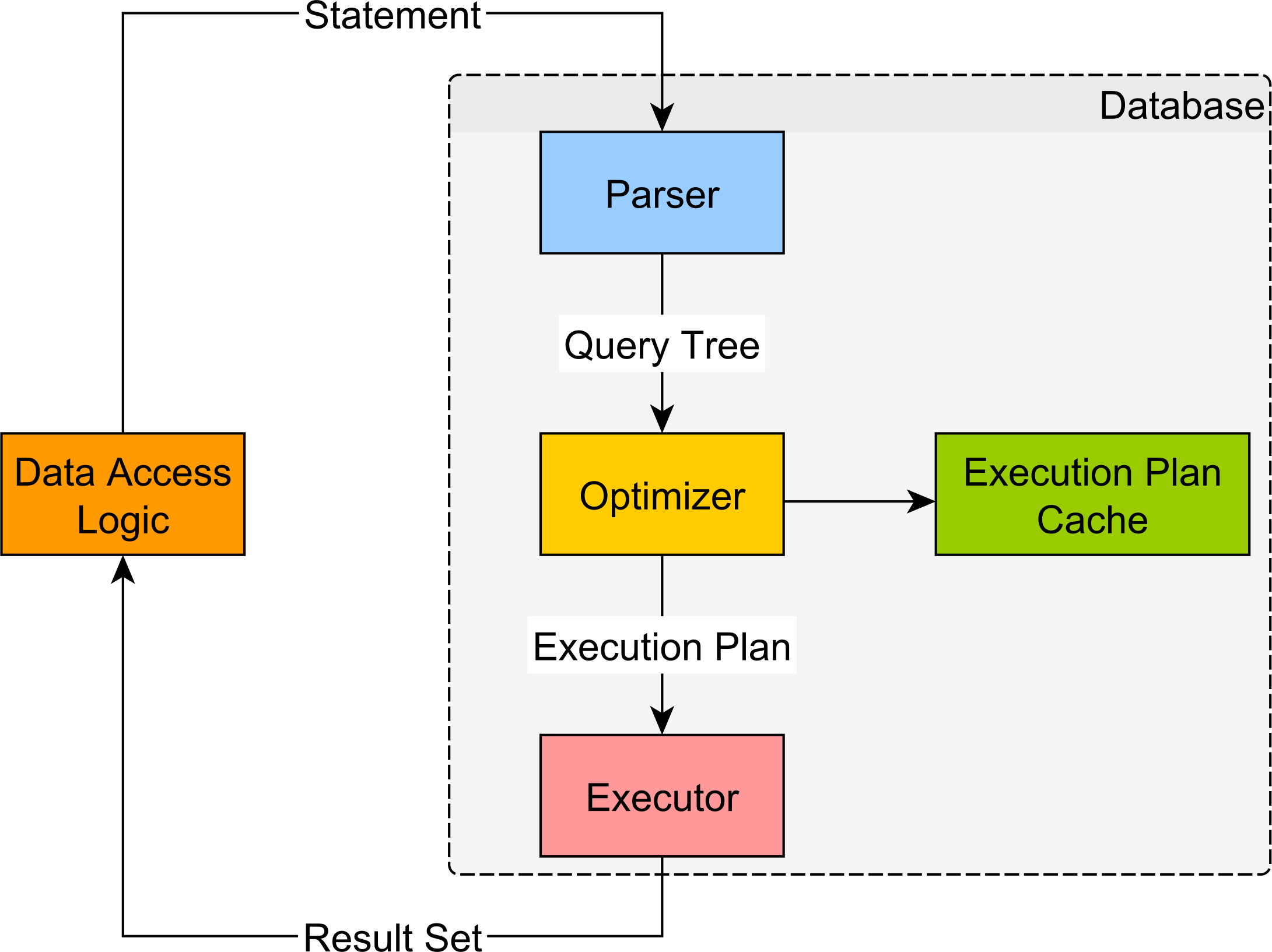
Therefore, in order to reuse an already generated Execution Plan, we need to use the same SQL statement String value for multiple combinations of IN clause bind parameters.
If you enable the hibernate.query.in_clause_parameter_padding Hibernate
<property>
    name="hibernate.query.in_clause_parameter_padding"
    value="true"
</property>
And rerun the previous test case, Hibernate will generate the following SQL queries:
Query:["
    SELECT  p.id AS id1_0_, p.title AS title2_0_
    FROM    post p
    WHERE   p.id IN (?, ?, ?, ?)
"],
Params:[
    1, 2, 3, 3
]

Query:["
    SELECT  p.id AS id1_0_, p.title AS title2_0_
    FROM    post p
    WHERE   p.id IN (?, ?, ?, ?)
"],
Params:[
    1, 2, 3, 4
]

Query:["
    SELECT  p.id AS id1_0_, p.title AS title2_0_
    FROM    post p
    WHERE   p.id IN (? , ? , ? , ? , ? , ? , ? , ?)
"],
Params:[
    1, 2, 3, 4, 5, 5, 5, 5
]

Query:["
    SELECT  p.id AS id1_0_, p.title AS title2_0_
    FROM    post p
    WHERE   p.id IN (? , ? , ? , ? , ? , ? , ? , ?)
"],
Params:[
    1, 2, 3, 4, 5, 6, 6, 6
]
Therefore, this time, only 2 Execution Plans are needed since both the first two queries and the last two ones have the same number of bind parameter values.
This is possible because Hibernate is now padding parameters until the next power of 2 number. So, for 3 and 4 parameters, 4 bind parameters are being used. For 5 and 6 parameters, 8 bind parameters are being used.
Cool, right?
If you enjoyed this article, I bet you are going to love my Book and Video Courses as well.



If you’re using Oracle or SQL Server, then you can benefit from Execution Plan caching. The IN clause parameter padding feature increases the chance of reusing an already generated Execution Plan, especially when using a large number of IN clause parameters.